
Amsterdam Walk and the Beltline: What Development Pressure Means for Nearby Landowners
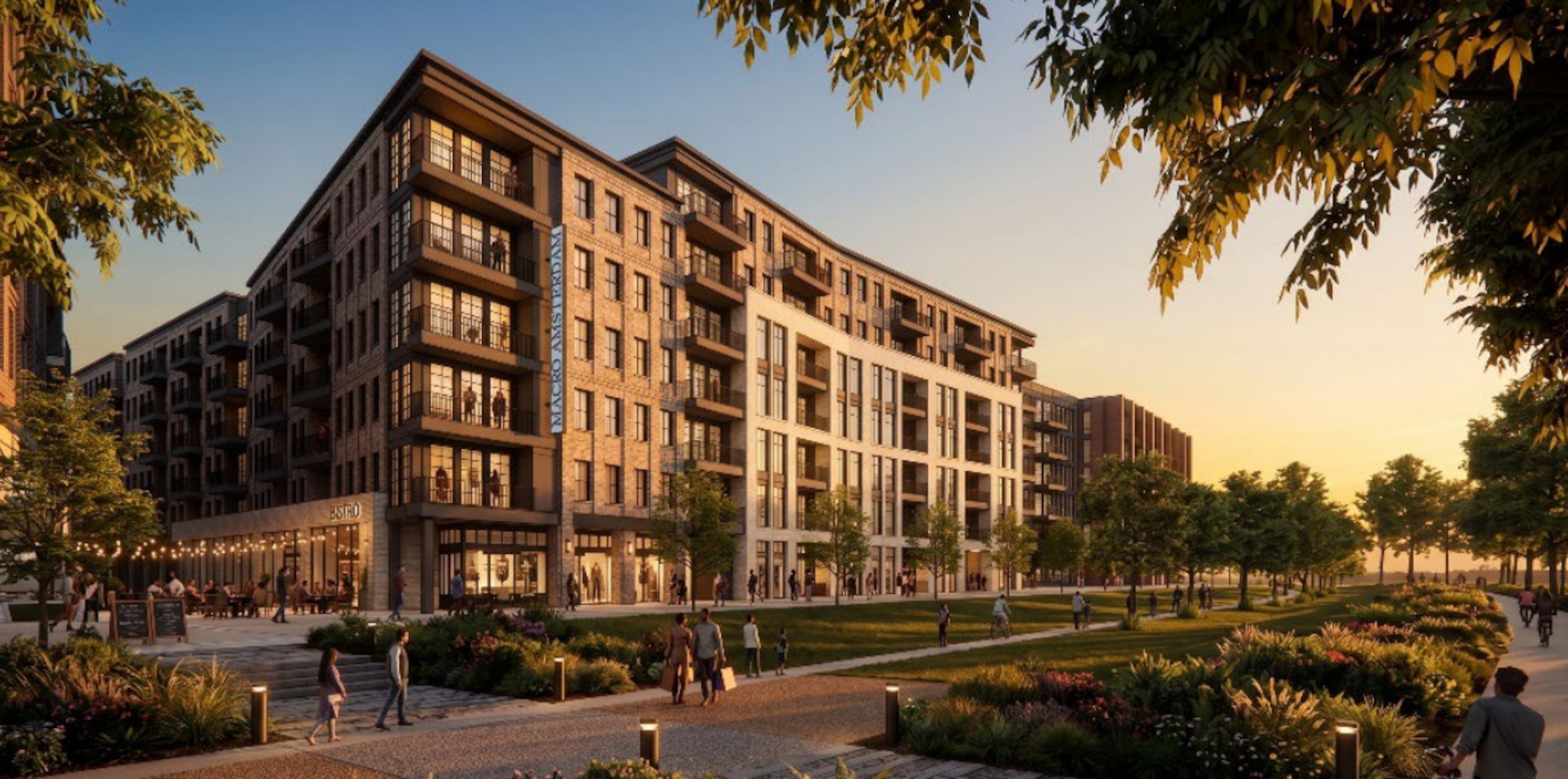
A major infill project is moving another step forward near the Atlanta Beltline.
On September 19, 2026, Atlanta News First reported that Invest Atlanta approved an estimated $14.8 million in tax savings for Portman Holdings’ Amsterdam Walk development near the Beltline and Piedmont Park. The project is currently planned to include approximately 674 multifamily units.
That news matters beyond the Amsterdam Walk site itself.
For nearby landowners, small infill owners, and owners of parcels that could be combined with neighboring properties, large development activity can change the way the surrounding dirt is evaluated.
The question is no longer just:
“What is this parcel worth per acre?”
The better question is:
“What role could this parcel play in a larger development plan?”
The Amsterdam Walk news
According to Atlanta News First, the tax savings are connected to infrastructure and construction for the Amsterdam Walk multifamily development.
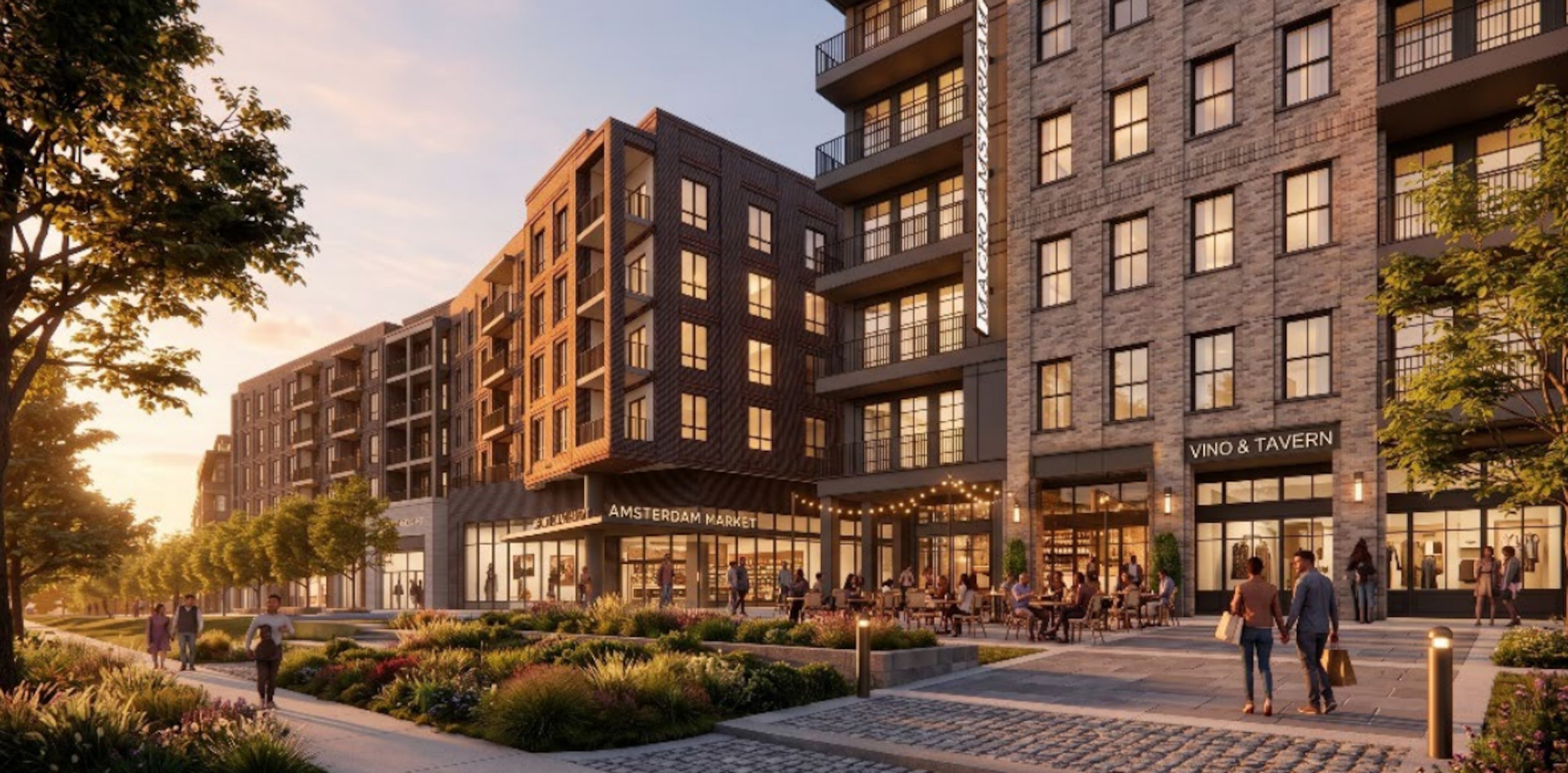
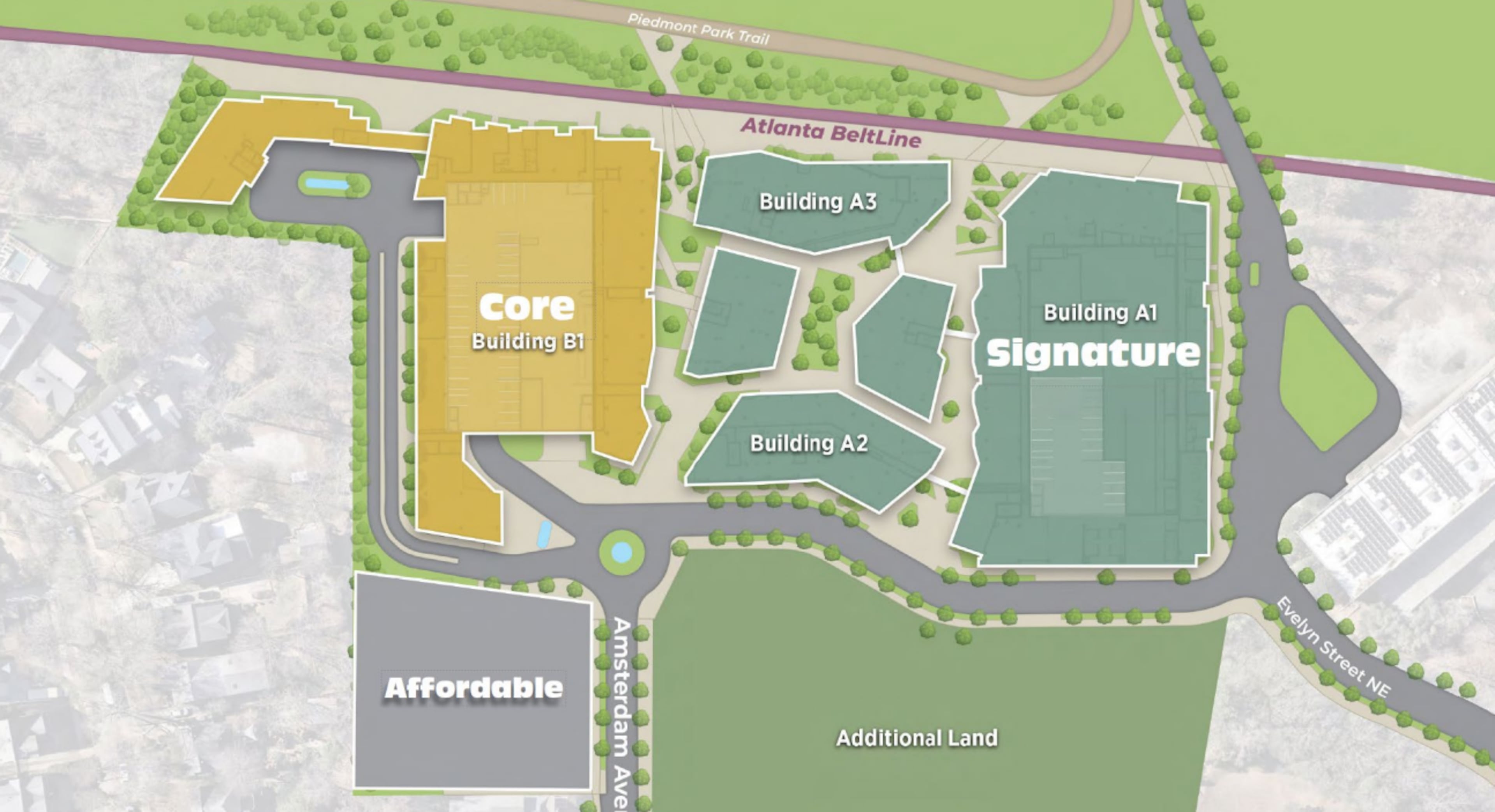
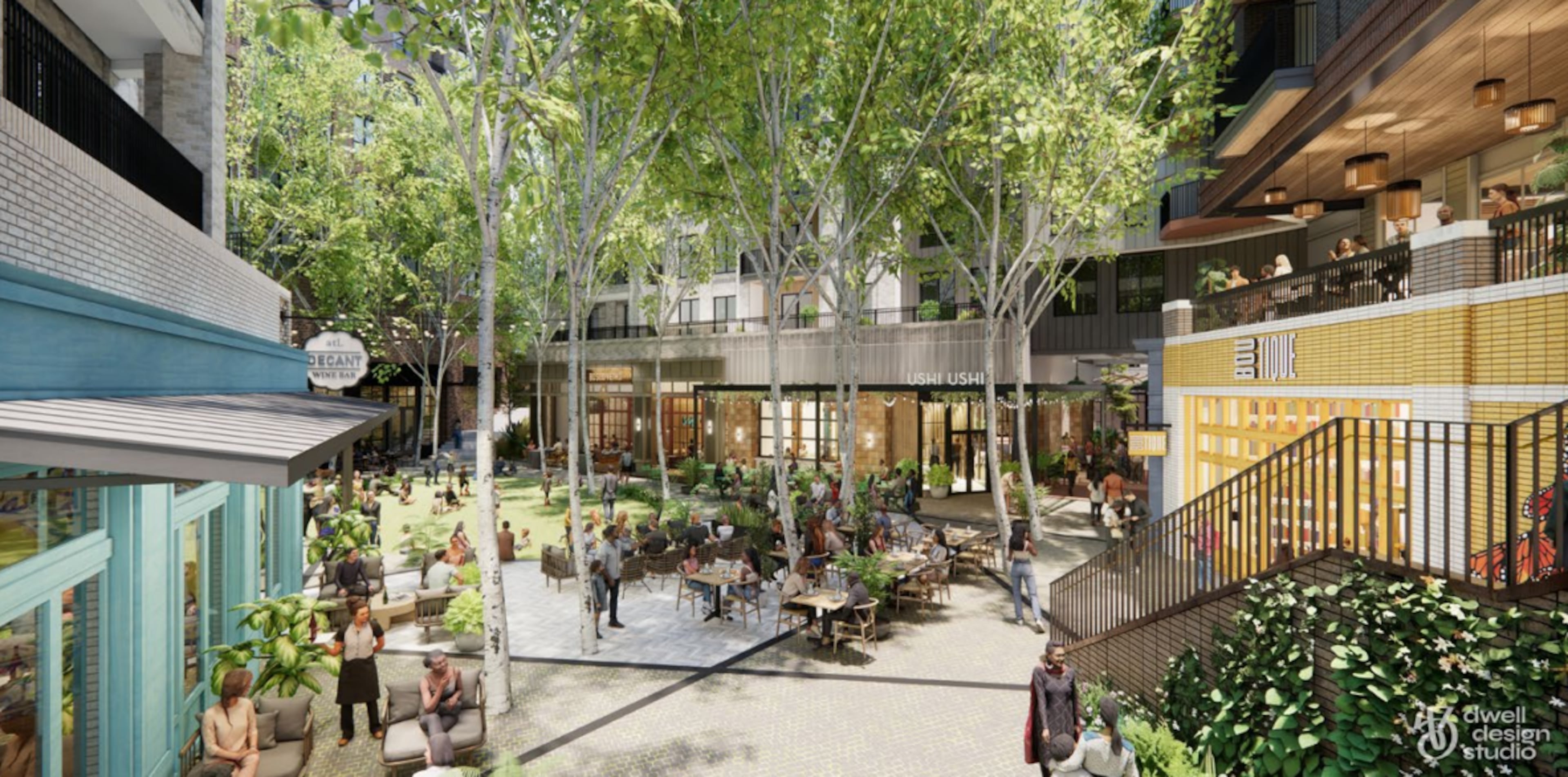
The project is planned near the intersection of the Virginia-Highland and Morningside areas, adjacent to the Atlanta Beltline and near Piedmont Park. Public reporting and project renderings show a larger mixed-use vision involving multifamily housing, commercial space, public areas, and connections to the Beltline.
The tax incentive is significant because it addresses project feasibility. Large urban developments must account for land cost, construction, financing, infrastructure, public improvements, affordability requirements, approvals, and operating projections.
But landowners should understand the distinction:
Tax incentives and approvals can support a project’s feasibility. They do not guarantee that the project will be built exactly as proposed.
Plans can change. Financing can change. Design, phasing, density, and timing can change. That is true for Amsterdam Walk and for nearly every major development project.
Still, the approval is a clear signal that the property is being evaluated as a major urban development opportunity.
That signal can affect how nearby land is analyzed.
Why a large infill project changes the surrounding land equation
A large multifamily development can create new pressure around it in several ways.
It can make nearby parcels more visible to developers. It can increase interest in rezoning or higher-density uses. It can make assemblages more valuable. It can also expose limitations involving access, utilities, parking, stormwater, and surrounding infrastructure.
The impact is not always immediate, and it is not automatically positive. But it changes the conversation.
Here are the main factors nearby landowners should watch.
1. Land basis becomes more important
A developer does not look at a parcel only as vacant land. The developer looks at the entire project budget.
That includes the land basis, the amount paid for the dirt, as well as:
- Construction costs
- Financing costs
- Infrastructure
- Professional fees
- Entitlement and zoning work
- Site improvements
- Required public improvements
- Operating assumptions
- Expected exit value
A parcel near major development may attract more attention. That does not mean every owner can name any price and expect a buyer to accept it.
The buyer still has to make the numbers work.
If a developer needs additional land to improve access, increase density, create a better site plan, or assemble a larger development footprint, the parcel may have strategic value beyond its standalone per-acre value.
That is where landowners need to be careful. The highest-value use of a parcel may not be the same as its current use.
2. Density can change the conversation
Large multifamily projects often bring attention to how much development an area can support.
That may lead developers and public officials to examine:
- Existing zoning
- Future land-use plans
- Density allowances
- Height and setback standards
- Parking requirements
- Traffic impacts
- Neighborhood transitions
- Infrastructure capacity
Nearby owners may hear terms such as “upzoning,” “rezoning,” or “higher-density infill.” These terms are important, but they should not be treated as guarantees.
A parcel’s theoretical density is not the same as its actual buildable yield.
For example, a zoning designation may appear to allow a certain amount of development on paper. The usable number can be reduced by roads, setbacks, buffers, stormwater facilities, topography, wetlands, floodplain, utility easements, fire access, parking, grading, engineering requirements, and government approvals.
The real question is not:
“How many units does the zoning code suggest?”
The real question is:
“How many units or lots could realistically be supported after the site is designed, engineered, reviewed, and approved?”
That distinction drives value.
3. Assemblage value can exceed standalone value
An assemblage is created when multiple parcels are combined into one larger development opportunity.
A small parcel may not support a significant project by itself. But when combined with neighboring land, it may help create:
- A larger development footprint
- Better road access
- More efficient building placement
- Improved parking or loading
- A more workable stormwater plan
- Additional frontage
- Better separation from surrounding uses
- A stronger rezoning case
This is why an adjacent parcel can become worth more to a developer than its per-acre value alone would suggest.
The parcel may be the missing piece.
It may connect two larger tracts. It may provide a second access point. It may eliminate an awkward site boundary. It may allow a developer to shift buildings away from nearby homes. Or it may make the entire assemblage easier to finance and sell.
That value is specific to the buyer’s plan. It is not automatic. A parcel is only strategically valuable if it solves a real problem or creates a real advantage.
4. Access and utilities can control the outcome
Infill development is often constrained by what is already around the site.
Road access matters. So do sewer, water, stormwater, power, fire access, and easements.
A nearby parcel may be attractive because it improves access or creates room for infrastructure. On the other hand, the surrounding system may not have the capacity to support additional development without upgrades.
Owners should avoid assuming that proximity to a major project proves utilities are available for their property.
The proper questions include:
- What utilities are actually near the parcel?
- Are they public or private?
- Is capacity verified?
- Are there easements or access restrictions?
- Would off-site improvements be required?
- Who would pay for those improvements?
- Would the parcel need to be rezoned?
- Can emergency and construction vehicles reach the site?
- Does the property have enough usable frontage?
Those details can move a parcel from attractive to difficult very quickly.
5. Development pressure creates both opportunity and risk
Nearby development can create more buyer interest. It can also create more scrutiny.
Landowners may face greater attention from:
- Multifamily developers
- Infill builders
- Commercial developers
- Land investors
- Assemblage specialists
- Property owners seeking expansion
- Investors positioning for future redevelopment
That does not mean every offer is a good offer.
A buyer may be interested in controlling the land while pursuing zoning, entitlements, engineering, or financing. Those steps carry risk and can take time.
Landowners should understand:
- What the buyer is trying to build
- Whether the buyer needs the parcel for an assemblage
- What approvals are required
- Whether the buyer wants to purchase or control the property
- What happens if approvals are not obtained
- Whether the proposed price reflects current use or future development assumptions
A serious land conversation starts with the property, the buyer’s plan, and the risks in between.
What nearby landowners should do now
If you own property near Amsterdam Walk, the Atlanta Beltline, Piedmont Park, or another active infill development area, start by gathering the facts.
Review:
- Current zoning
- Parcel size and shape
- Road frontage
- Existing access
- Utility locations
- Easements
- Topography
- Floodplain or wetland concerns
- Existing improvements
- Neighboring ownership
- Potential assemblage opportunities
Then look at the property through four lenses:
Opportunity. What could the site support?
Value. Who would pay for that potential?
Risk. What could prevent or reduce development?
Exit. Who is the likely buyer?
Do not rely on a headline, a rendering, or a zoning label alone. A development concept is not a site plan, and a site plan is not an approval.
The right analysis connects the land to a realistic buyer and a realistic development path.
Own land near active development? Let’s talk dirt.
If you own an infill parcel, an underutilized property, or land that may fit into a larger assemblage, Tellus Mater LLC can help evaluate the opportunity from an investor and development perspective.
We look at acreage, zoning, access, utilities, density, surrounding development, entitlement potential, and exit strategy.
You do not need to have a finished development plan before starting the conversation.
Call Derrick Bostic at 678-724-6481.
You can also call Rachel at 478-242-4097. Rachel is call-only, no texts.
From raw dirt to the next development, the first step is understanding what the land can become and who may need it.
Sources
- Atlanta News First: Developer gets $14.8 million tax savings for Beltline development at Amsterdam Walk
- AJC: Photos and renderings of the Amsterdam Walk redevelopment
Content Pack
Three social media hooks
- A major Beltline development just changed the conversation for nearby landowners.
- Your parcel may be worth more to a developer as part of an assemblage than on a per-acre basis.
- 674 multifamily units. $14.8 million in approved tax savings. What does Amsterdam Walk mean for nearby dirt?
Contact footer for each hook:
Call Derrick Bostic at 678-724-6481 or Rachel at 478-242-4097. Rachel is call-only, no texts.
Facebook post idea
Amsterdam Walk is moving forward with approximately 674 planned multifamily units near the Atlanta Beltline and Piedmont Park. Invest Atlanta also approved an estimated $14.8 million in tax savings for the project.
For nearby landowners, the bigger issue is what happens around the project.
Large infill development can increase attention on neighboring parcels, create assemblage opportunities, and put more focus on zoning, density, access, utilities, and realistic buildable yield.
That does not mean every nearby property is automatically worth more. It means the property needs to be analyzed differently.
Own land near active development? Call Derrick Bostic at 678-724-6481 or Rachel at 478-242-4097. Rachel is call-only, no texts.
Instagram carousel
- Amsterdam Walk is moving forward
- Approximately 674 multifamily units are planned
- Invest Atlanta approved an estimated $14.8M in tax savings
- Nearby parcels may gain strategic value
- Assemblage value can exceed per-acre value
- Zoning is not the same as buildable yield
- Own nearby dirt? Let’s talk
Caption CTA: Call Derrick Bostic at 678-724-6481 or Rachel at 478-242-4097. Rachel is call-only, no texts.
Two reel ideas
Reel 1: “What does Amsterdam Walk mean for nearby landowners?”
- Open with Beltline or conceptual project imagery.
- Explain the reported tax savings and planned multifamily scale.
- Show how nearby parcels may become more visible to developers.
- Explain assemblage value in plain English.
- Close with: “Own land near active development? Call Derrick at 678-724-6481 or Rachel at 478-242-4097.”
Reel 2: “Your zoning number is not your lot count”
- Start with: “A zoning label does not guarantee a development yield.”
- Explain roads, setbacks, buffers, stormwater, topography, wetlands, utilities, and approvals.
- Connect the issue to nearby Beltline infill development.
- Close with the same contact information.
Five short takeaways
- Amsterdam Walk is planned as a major multifamily development near the Atlanta Beltline.
- Invest Atlanta approved an estimated $14.8 million in tax savings for the project.
- Nearby parcels may have strategic assemblage value.
- Theoretical density is not the same as actual buildable units or lots.
- Landowners should evaluate opportunity, value, risk, and exit before deciding what to do.
Email subject and content idea
Subject: What Amsterdam Walk could mean for nearby landowners
Content:
Amsterdam Walk is back in the development conversation. With approximately 674 multifamily units planned and an estimated $14.8 million in tax savings approved, the project is another example of how major infill development can affect surrounding land.
Nearby owners should be thinking about zoning, density, access, utilities, assemblage value, and who may need the parcel, not just the current per-acre value.
Own land near active development? Call Derrick Bostic at 678-724-6481 or Rachel at 478-242-4097. Rachel is call-only, no texts.