
AMLI Market Square and the Decatur Land Play: What Redevelopment Signals to Owners

Conceptual image, not AMLI Market Square or an actual property.
An old commercial site can look tired on the surface and still carry serious land value.
That is the signal behind AMLI Market Square in downtown Decatur, Georgia. Construction is underway on a reported $144 million redevelopment of the former “Baby Kroger” site. The project is planned to include 358 apartments and a new grocery store.
Hoodline reported the project on September 9, 2026.
For owners of older retail buildings, vacant commercial sites and infill parcels, the lesson is direct:
The current use of your property may not be the highest-value use of the land.
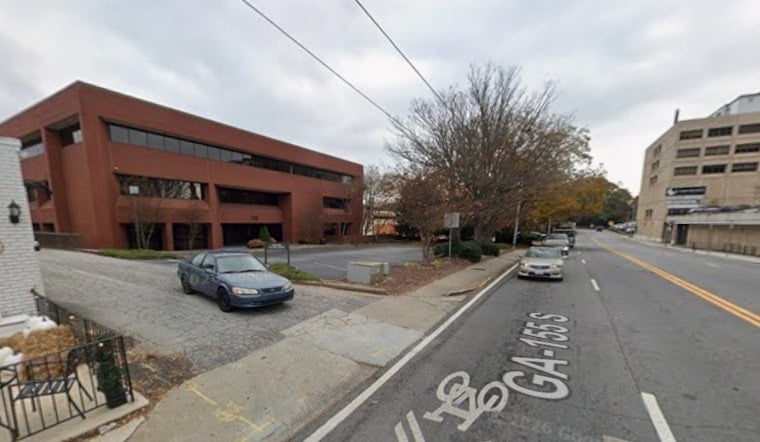
Reported construction image via Hoodline.
The quick answer for landowners
A developer may pay more for an underperforming commercial site than the property’s current income appears to justify when the land can support a stronger future use.
That does not mean every vacant building is worth more as a development site. It means the property must be evaluated through a different lens.
The important questions become:
- Is the location attractive for new housing, retail or mixed-use development?
- Does the site have practical road access?
- Are utilities available and adequate?
- Does current zoning support the likely use?
- Is rezoning, conditional use approval or another entitlement path realistic?
- Is there demand from residents, retailers, builders or developers?
- Can the site support a workable project after setbacks, stormwater, parking, roads, buffers and other requirements?
That is the land play.
The building matters. But the dirt, location and development path may matter more.
Why AMLI Market Square matters
The former Baby Kroger site had an existing commercial identity. But the redevelopment plan changes the way the property functions.
Instead of relying on one older retail use, AMLI Market Square is being positioned as a combination of:
- Multifamily housing
- A grocery store
- Ground-floor retail
- Shared parking and access
- A more active connection to downtown Decatur
The grocery component is especially important.
A grocery store is not simply another retail tenant. It can change how a development is underwritten because it may influence daily traffic, resident demand, retail leasing, parking requirements and the overall role of the site within the surrounding area.
A developer evaluating a grocery-anchored project may look at more than the rent from the retail space. The anchor can help support the broader project by giving residents and nearby customers a reason to visit regularly.
That does not guarantee success. It does not eliminate construction, leasing or entitlement risk. But it changes the investment analysis.
A vacant commercial building with weak income may look like a poor income property. The same parcel may look different if it can support a larger, better-integrated development.
Current income is not the same as land value
Owners often begin with a reasonable question:
“What is this property worth based on what it produces today?”
That is one part of the analysis. It is not always the entire analysis.
A low-rent building may have limited income because the improvements are outdated, the layout is inefficient, the tenant demand is weak or the property no longer fits the surrounding market.
A vacant building produces even less. But the absence of income does not automatically mean the land has no value.
A developer may evaluate the site based on its potential residual value. In plain English, that means estimating what the completed project could support, then subtracting the costs and risks required to get there.
Those costs may include:
- Acquisition
- Demolition or site clearing
- Design and engineering
- Construction
- Financing
- Utilities and infrastructure
- Roads and access improvements
- Entitlements and approvals
- Stormwater management
- Professional fees
- Holding costs
- Contingencies
- Required contributions or mitigation
What remains after those costs is part of the developer’s land basis.
If the numbers do not work, the developer will not pay a premium simply because the site is in a good location. If the numbers do work, the land may be worth more to a developer than to an owner focused only on current rent.
That is why owners need to understand both sides of the property:
Income value today. Development value tomorrow.
What makes a site redevelopable?
“Redevelopable” does not mean “guaranteed to be approved.”
It means the site may have a realistic path toward a better use after proper review.
1. Location
A site near established activity, employment, transportation, services or walkable destinations may attract more interest than an isolated parcel.
Location does not solve every problem. But it affects demand, marketability and the types of users who may consider the property.
2. Access
Developers need practical access for residents, customers, emergency services, deliveries and construction.
A site with poor frontage, difficult turns, limited entrances or traffic constraints may require expensive solutions. Access should be reviewed early, not after a contract is signed.
3. Utilities
Water, sewer, power and stormwater capacity can influence what a site can support.
A parcel may appear large enough for apartments or commercial development, but available utility capacity can limit the project. Sewer availability in particular can materially affect density and feasibility.
Utilities must be verified. They should never be assumed from nearby development.
4. Zoning and entitlement path
Zoning determines what is allowed today. Entitlements determine what may be approved through the applicable public process.
A site may need rezoning, a variance, a conditional use, a development plan approval or other government action. Each path carries time, cost and uncertainty.
Owners should separate:
- What is allowed by right
- What may be possible with approvals
- What is only a conceptual idea
Those are not the same thing.
5. Surrounding demand
The best concept on paper still needs a market.
A developer may study nearby housing demand, retail activity, traffic patterns, employment centers, competing projects and buyer or tenant preferences.
The question is not simply, “What can be built?”
The better question is:
“What can be built that someone will pay for?”

Conceptual image: site conditions, access and surrounding uses must be verified for each property.
Density is not the same as buildable units
This is where many land conversations go off track.
An owner may hear that a site has enough acreage for a certain number of apartments, townhomes or lots. But theoretical density is only a starting point.
Actual buildable units can be reduced by:
- Internal roads
- Setbacks
- Buffers
- Parking
- Stormwater facilities
- Topography
- Wetlands
- Floodplain
- Tree requirements
- Fire access
- Utility locations
- Building spacing
- Engineering constraints
- Government approvals
The reported 358 apartments at AMLI Market Square describe that specific project. They should not be used as a shortcut for evaluating another commercial or infill parcel.
Every site has its own physical conditions, zoning framework, market and approval process.
A serious land analysis tests the concept against those realities.
Why an owner should not wait for a developer to explain the property
Many owners know their building’s history. They know the rent, the tenant issues, the maintenance costs and the property taxes.
A developer is looking at a different set of facts:
- Parcel size and configuration
- Adjacent ownership
- Redevelopment scale
- Potential assemblage
- Access points
- Utility location
- Zoning
- Nearby development
- Exit strategy
- Likely end users
The owner who understands both perspectives is in a stronger position.
That does not mean every owner should pursue rezoning or spend heavily on plans before speaking with a buyer. In many cases, the first step is a focused conversation to determine whether the site belongs in a builder’s or developer’s buy box.
It also means an owner should be careful about signing a long-term agreement or accepting a price based only on the existing building without understanding whether the land may attract another type of buyer.
What should an owner prepare?
Before starting a conversation, gather what is available:
- Current survey or parcel information
- Existing leases
- Property operating information
- Zoning details
- Utility information
- Access and easement documents
- Environmental or engineering reports
- Prior plans or studies
- Any known code, title or site issues
You do not need a finished development plan to begin.
You do need a clear understanding of what you own and what problem a buyer may need to solve.
The right buyer may want to preserve the current use. Another may want to redevelop the site. A third may value the parcel as part of an assemblage.
Those are different buyers with different underwriting.
The landowner takeaway
AMLI Market Square is a useful redevelopment signal because it shows how an older commercial site can be evaluated for more than its current storefront, building or rent roll.
The opportunity is not automatic. Redevelopment requires zoning review, engineering, utilities, market demand, financing, approvals and execution.
But owners should not assume a low-rent or vacant commercial property has limited value simply because the existing use is weak.
Sometimes the most important question is not:
“What is this building worth today?”
It is:
“What could a qualified buyer realistically do with this land?”
That is the conversation Tellus Mater is built to have.
We evaluate land through the lens of opportunity, value, risk and exit. If you own an underused commercial site or infill parcel in Georgia or the Southeast, let’s take a look at the dirt and determine whether the current use is still the best use.
Contact Derrick Bostic at 678-724-6481.
Rachel can be reached at 478-242-4097 for calls only, no texts.
Development concepts are not guarantees of zoning approval, density, value or returns. Site conditions, market demand, financing, engineering and government approvals must be verified for each property.
Sources
Content Pack
Three social media hooks
- Your old commercial building may be worth less than the land underneath it, or far more to the right buyer.
- AMLI Market Square is a reminder: owners need to evaluate the dirt, not just the rent roll.
- What makes an underused commercial site redevelopable? Location, access, utilities, zoning and a real exit.
Facebook post idea
AMLI Market Square is moving forward on the former Baby Kroger site in downtown Decatur.
The reported $144 million redevelopment is planned to include 358 apartments and a new grocery store.
For owners of older commercial buildings and infill parcels, the bigger lesson is about land value. A site with weak current income may still attract developer interest if the location, access, utilities, zoning and market demand support a stronger use.
Own an underused commercial or infill parcel in Georgia or the Southeast?
Contact Derrick Bostic at 678-724-6481 or Rachel at 478-242-4097 for calls only, no texts.
Instagram carousel
- AMLI Market Square is under construction
- The former Baby Kroger site is being redeveloped
- Reported plan: 358 apartments + a grocery store
- The land may be worth more than the current building produces
- But density is not the same as buildable units
- Roads, setbacks, stormwater, utilities and approvals matter
- Own underused commercial land? Let’s talk dirt
- Derrick: 678-724-6481 | Rachel: 478-242-4097, calls only
Two reel ideas
Reel 1: “What is your old commercial site really worth?”
- Show an older commercial building or vacant retail parcel.
- Explain the difference between current income value and redevelopment value.
- Close with: “Own underused commercial land? Call Derrick at 678-724-6481.”
Reel 2: “Why grocery anchors change the land play”
- Explain how a grocery component can influence traffic, resident demand, retail leasing and project underwriting.
- Clarify that an anchor does not guarantee a successful project.
- Close with: “Rachel: 478-242-4097 for calls only, no texts.”
Five short takeaways
- Current rent is only one measure of commercial property value.
- A redevelopable site needs more than available acreage.
- Access, utilities and zoning can determine whether a concept works.
- Theoretical density is not the same as the final buildable count.
- Grocery anchors can change how a mixed-use site is underwritten.
Email subject and content idea
Subject: Is your underused commercial site worth more as land?
Content:
AMLI Market Square is being built on the former Baby Kroger site in downtown Decatur. The reported project includes 358 apartments and a new grocery store.
The owner-side lesson is simple: a low-rent or vacant commercial property may need to be evaluated as a redevelopment site, not just an income property.
If you own commercial or infill land in Georgia or the Southeast, contact Derrick Bostic at 678-724-6481 or Rachel at 478-242-4097 for calls only, no texts.